Dermatologist-led acne programme: extraction, acne injections, medication, LED light and lasers
Acne is a skin condition with medication proven to work by medical evidence. The doctor assesses its severity and prescribes the right treatment, supported by procedures and lasers to settle it faster and reduce marks and scarring.
Why acne should be treated by a doctor
Acne arises from four mechanisms acting together: abnormal shedding of skin cells inside the pore that leads to blockage, excess oil production driven by hormones, overgrowth of the bacterium Cutibacterium acnes, and inflammation. Effective treatment must address several of these at once with medication chosen for the type and severity, not simply extraction or a single cream. Acne that keeps flaring for months leaves dark marks, red marks and permanent scars, which are far harder and more expensive to treat than controlling the acne itself. Seeing a doctor while acne is still moderate pays off in the long run.
Severity and approach
| Grade | Appearance | Main approach |
|---|---|---|
| Mild | Blackheads and whiteheads, a few small red spots | Topical retinoid, benzoyl peroxide, comedone extraction, carbon laser |
| Moderate | Many red and pus-filled spots across the face | Topicals plus oral antibiotics for 6–12 weeks, or certain contraceptive pills for women; injections for inflamed spots; LED light |
| Severe | Nodules, cysts, painful lumps, or resistant to other treatment | Oral isotretinoin for 5–8 months under medical supervision with blood tests; acne injections |
| Hormonal acne in women | Spots on the chin and jawline, flaring before periods | Spironolactone or a contraceptive pill as appropriate, with topicals |
Supporting procedures and technology
Extraction by trained nurses
Only for ready comedones and mature pustules, with sterile instruments. Deep inflamed spots are not extracted because that causes scarring
Acne injections (intralesional steroid)
Low-concentration steroid into large inflamed spots, which flatten within 24–48 hours. Not repeated too often, to avoid dents
Blue and red LED light
415 nm reduces bacteria, 630 nm reduces inflammation. 15–20 minutes, once or twice a week, with no discomfort
Carbon laser
Reduces oil and clogged pores, as a supporting treatment for mild to moderate acne
Perfect Bright 578 nm
Reduces red acne marks once new acne has settled
Salicylic acid peel
20–30% dissolves oil inside the pores, every 2–4 weeks
Isotretinoin: how to use it without problems
Isotretinoin is the only medication that addresses all four mechanisms of acne and brings severe acne under long-term control in most patients, but it must be prescribed and monitored by a doctor only. Blood tests for lipids and liver function are taken before starting. Women must use strict contraception and have a pregnancy test first, because the drug causes birth defects. During treatment the lips and skin are dry, and ablative lasers and waxing are avoided. The doctor sees you every 4–8 weeks to adjust the dose and repeat blood tests. A course lasts 5–8 months, and a 6-month gap is left after stopping before fractional laser or acne scar procedures.
What happens when you come for acne treatment
Forms painful lumps or cysts, flares suddenly with a fever, began after using steroids or mixed creams, comes with excess hair, irregular periods or hair loss, which may indicate polycystic ovary syndrome, or scars quickly even when the spots are small
Results from our patients
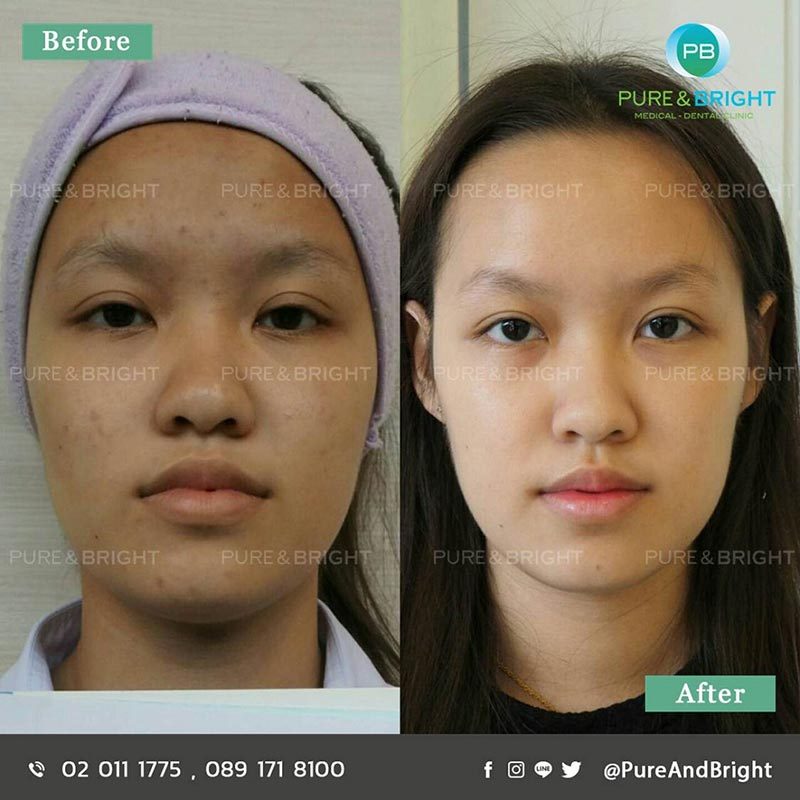
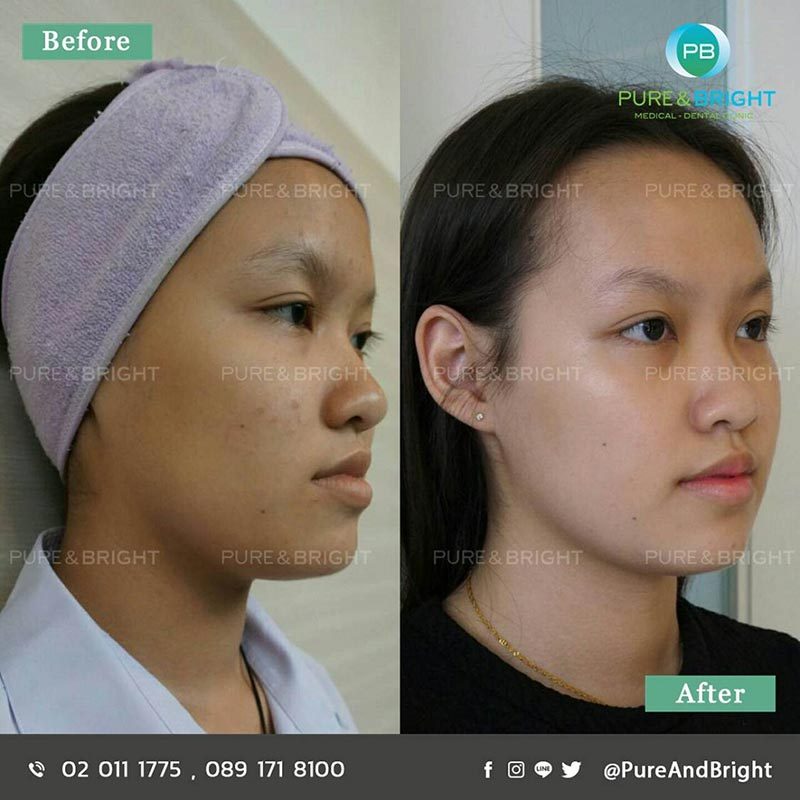
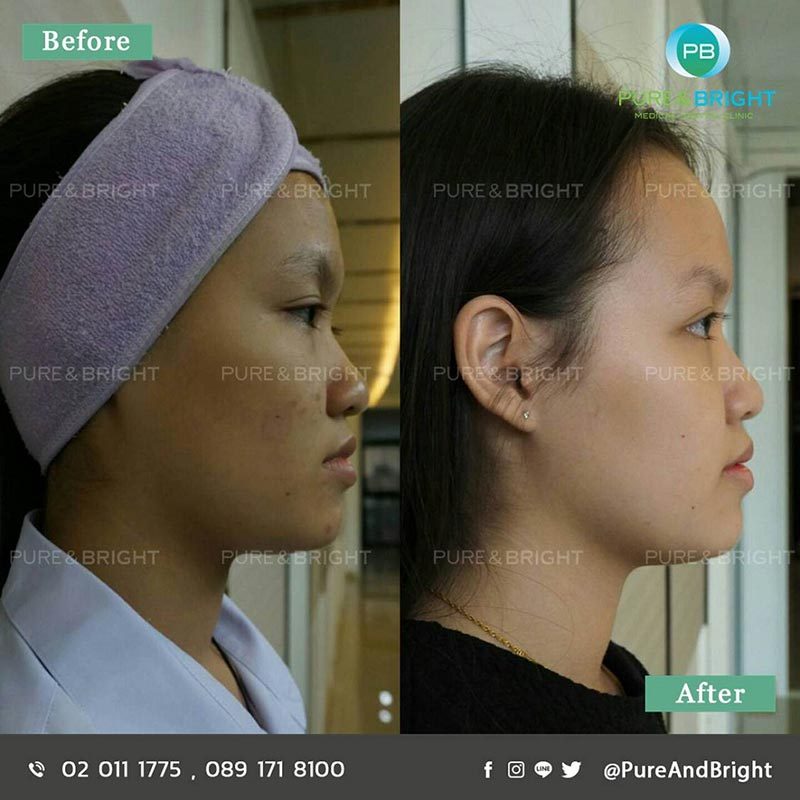
Prices
| Acne examination and treatment planning By a dermatologist | Free |
| Topical and oral medication as prescribed Charged per item, typically per month | [ ] |
| Full-face extraction, 1 session Cleansing, comedone extraction, anti-inflammatory mask | [ ] |
| Acne injection, per spot | [ ] |
| LED light, 1 session 15–20 minutes | [ ] |
Frequently Asked Questions
How long before acne treatment shows results?
Topical and oral medication generally start to show results at 6–8 weeks and clearly by 3 months. In the first 2–4 weeks acne may flare temporarily because of the retinoid, which is normal.
Does extraction cause scarring?
Extracting ready comedones with the correct instruments and technique does not cause scarring. Scars come from squeezing deep inflamed spots yourself or from forceful, incorrect extraction. We do not extract inflamed spots that are not mature.
Is isotretinoin dangerous?
It is a medication with clear side effects, such as dry skin and raised blood lipids, and it must not be used during pregnancy. But when a doctor screens, tests blood and monitors to standard, most people tolerate it with the side effects managed. It should never be bought and taken without supervision.
Is men's acne different from women's?
Men produce more oil and more often have acne on the back and chest, while women's acne follows the menstrual cycle. The medication differs accordingly; hormonal treatments, for example, are used only in women.
 WhatsApp
Related services
Skin & Laser
Melasma, freckles, dark spots, acne, acne scars, pores, hair removal and mole removal with multiple laser systems
Injectables & Skin Rejuvenation
Anti-wrinkle injections, HA filler, skin boosters, collagen stimulators, PRP and fat-dissolving injections
Non-Surgical Lifting
HIFU, radiofrequency, thread lifting, plasma double-eyelid treatment, Enerjet and LDM