HIFU facial lifting to the SMAS layer with focused ultrasound, no surgery
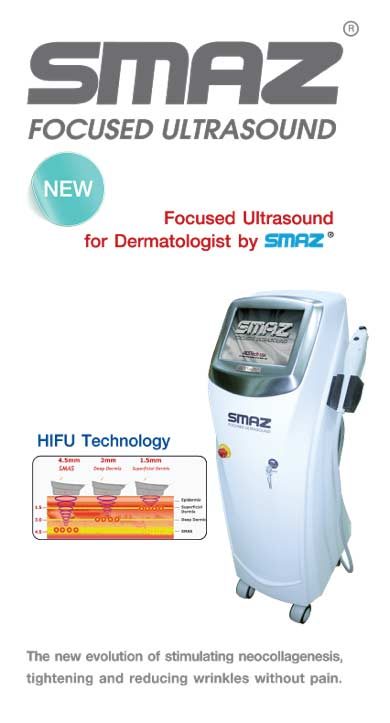
HIFU delivers high-intensity ultrasound focused at depths of 1.5, 3 and 4.5 millimetres, using heat to stimulate collagen and tighten the SMAS layer, the same layer a surgeon tightens in a facelift.
How HIFU works
HIFU (High-Intensity Focused Ultrasound) belongs to the same family of technology as Ultherapy. Sound waves are focused so the energy concentrates at tiny points beneath the skin, where the temperature rises to about 60–70°C in a fraction of a second. Existing collagen fibres contract and the body builds new collagen over the following months. The surface skin is not damaged because the energy passes through it unfocused, so there are no wounds and you can return to normal life immediately afterwards. The clinic uses the SMAZ device from AESTechUSA in the United States, with 4 and 7 MHz transducers covering three depths.
The three depths of SMAZ
4.5 mm: SMAS layer
The connective tissue layer over the facial muscles. Uses 4 MHz to lift the jawline, cheeks, under the chin and the neck
3 mm: deep dermis
Stimulates collagen so the skin becomes thicker and firmer, reducing nasolabial folds and cheek sagging
1.5 mm: superficial dermis
7 MHz for the thin skin around the eyes, the forehead and fine lines, and to tighten pores
Who it suits
- A jawline that is losing definition, sagging cheeks or a double chin
- Nasolabial folds deepening as the cheeks sag
- Drooping brows, drooping outer eye corners, upper eyelids beginning to sag
- Lines on the forehead, crow's feet, under the eyes, at the mouth corners and on the neck
- Enlarged pores and skin that lacks firmness
- Wanting tightening with no wounds and no downtime
The procedure day
Results over time
Are pregnant or breastfeeding, have a pacemaker or metal implants in the treatment area, have a history of keloids, have taken oral retinoids within 6 months, have uncontrolled diabetes, have open wounds, severe inflammatory acne or a skin infection in the area, or have had filler injected less than 2 weeks ago
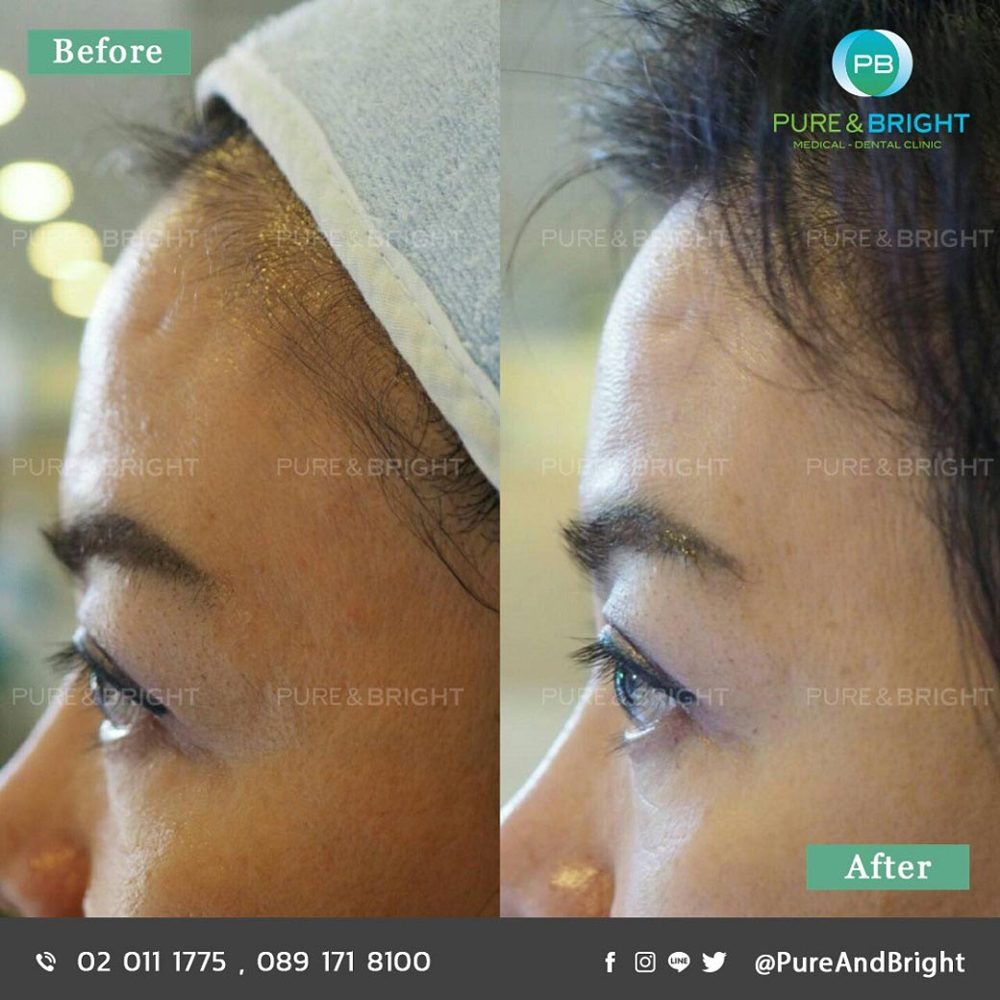
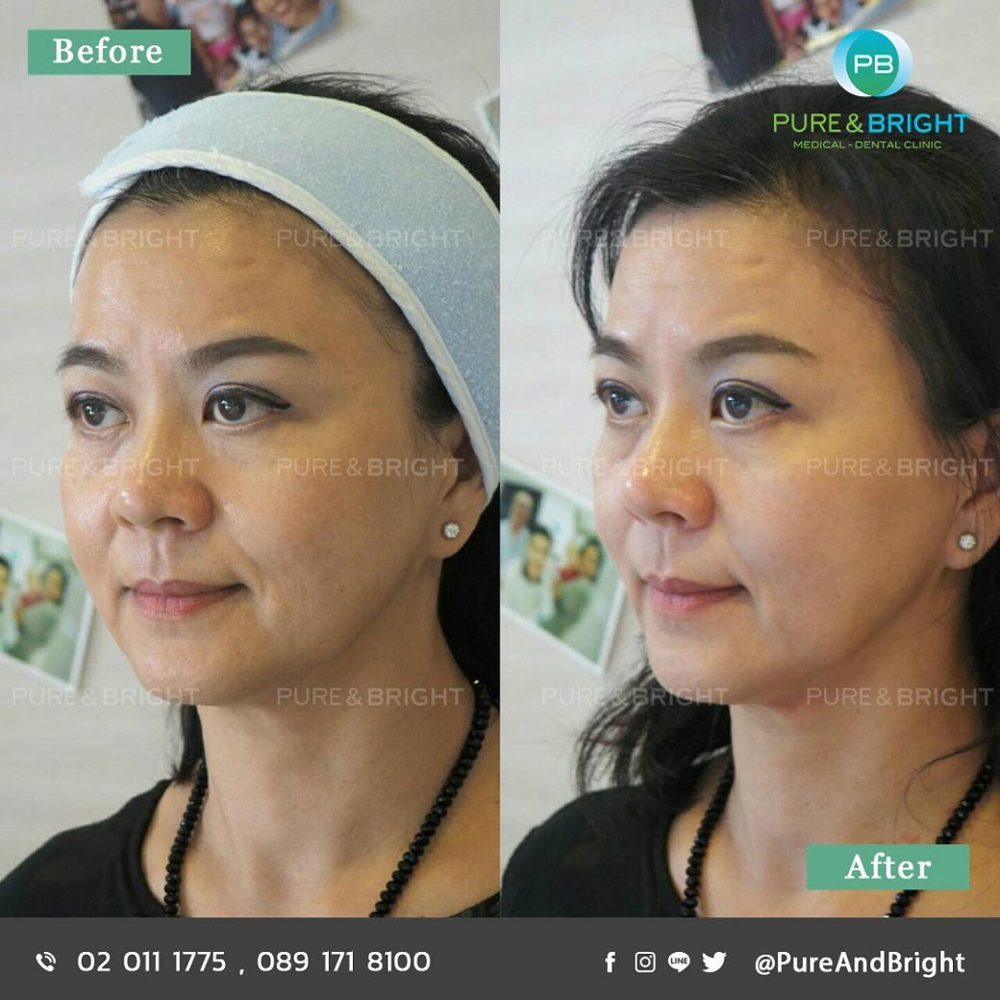
Results from our patients
Related services
Prices
| HIFU full face Including anaesthetic, 300–600 shots as set by the doctor | [ ] |
| HIFU face and neck Adds the under-chin and neck zones | [ ] |
| HIFU around the eyes (Eye Lift) 7 MHz transducer at 1.5 mm for the brows, outer eye corners and under the eyes | [ ] |
Frequently Asked Questions
Does HIFU hurt?
You feel pulses of heat and a deep, dull sensation, particularly along the jawline and under the chin where the skin is thin and close to bone. Topical anaesthetic and energy adjustment mean most people tolerate it well.
How many HIFU sessions are needed?
Most people have a single session, review the result at 2–3 months and repeat about once a year to maintain it. For more pronounced sagging, the doctor may schedule a touch-up of certain zones at 3–6 months.
How does HIFU differ from Ultherapy?
They are the same technology, focused ultrasound. Ultherapy is one brand that includes ultrasound imaging, while SMAZ is a HIFU device with equivalent depths and frequencies. Results depend more on the settings and the skill of the operator than on the device name.
How do I care for my skin after HIFU?
Apply sunscreen and moisturiser as usual. Avoid lasers, saunas and vigorous facial massage for about 1–2 weeks. Make-up can be worn from the day of treatment.
What are the limitations and side effects of HIFU?
HIFU does not add volume. If nasolabial folds are deep because of fat loss, filler should be considered as well, and if sagging is pronounced, surgery is more appropriate. Possible side effects include redness, swelling, temporary numbness and, rarely, temporary weakness at the corner of the mouth, which usually resolves within a few weeks.
 WhatsApp
Related services
Non-Surgical Lifting
HIFU, radiofrequency, thread lifting, plasma double-eyelid treatment, Enerjet and LDM
Skin & Laser
Melasma, freckles, dark spots, acne, acne scars, pores, hair removal and mole removal with multiple laser systems
Injectables & Skin Rejuvenation
Anti-wrinkle injections, HA filler, skin boosters, collagen stimulators, PRP and fat-dissolving injections