Dermatologist-led melasma programme: laser, topical and oral medication and sunscreen for long-term control
Melasma can be controlled but not cured, so effective treatment combines several methods and adjusts them to your response. Dr. Kate plans everything from diagnosing the type of melasma to topical treatment, sunscreen, low-energy laser and oral medication where appropriate.
What melasma is, and why it is hard to clear
Melasma is the brown patches on the cheeks, forehead, nose and upper lip caused by pigment cells that are more reactive to triggers than normal. The main triggers are UV and visible light, together with heat, hormones from pregnancy or contraceptives, genetics and irritating cosmetics. Beneath the patches there are also dilated capillaries and sun-damaged dermis, which keep signalling the skin to produce pigment, so melasma returns whenever care stops. The honest goals are therefore two: to fade the melasma until it no longer bothers you, and to keep it under control with a routine you can realistically follow every day.
Types of melasma and how they respond
| Type | Appearance | Approach |
|---|---|---|
| Epidermal (superficial) | Sharp edges, dark brown, more distinct under Wood's lamp | Responds well to topical treatment and sunscreen; laser speeds things up |
| Dermal (deep) | Blurred edges, grey-blue, unchanged under Wood's lamp | Responds slowly; low-energy laser with oral medication. Expect fading, not clearance |
| Mixed | The most common type in Thai skin | Combines every method, adjusted to response every 4–8 weeks |
| Melasma with a vascular component | Reddish brown with visible capillaries | Add Perfect Bright 578 nm to reduce the vascular trigger |
The tools in the programme
Tinted broad-spectrum sunscreen
SPF 50 PA++++ with iron oxides to block visible light, reapplied every 2–3 hours. The foundation nothing else can replace
Pigment-reducing topicals
Time-limited hydroquinone 2–4%, combination creams, azelaic acid, topical tranexamic acid and retinoids, as prescribed by the doctor
Oral tranexamic acid
250 mg twice daily for 8–12 weeks, in patients screened as having no clotting risk
Low-energy pigment laser (toning)
1064 nm picosecond every 2–4 weeks for 5–10 sessions, fading the melasma without provoking it to darken
Perfect Bright 578/511 nm
For melasma with capillaries, and to even the skin tone with no scabbing
Gentle peels and infusion
Low-strength glycolic acid or ultrasound vitamin C infusion, added in some cases
A typical treatment plan
Melasma does not clear completely; a realistic expectation is fading to the point that light make-up covers it. Laser that is too strong or too frequent can darken melasma or cause white patches. Hydroquinone is used for no more than 3–4 months at a time before a break. Melasma creams with undisclosed ingredients often contain steroids and mercury; stop them and bring them to show the doctor. During pregnancy or breastfeeding, only azelaic acid and sunscreen are used
Daily habits that genuinely make a difference
- Sunscreen every day, even indoors; light through windows and from screens affects melasma
- A wide-brimmed hat or umbrella whenever you are outdoors for more than 15 minutes
- Avoid intense heat such as saunas, because heat can trigger melasma even without sun
- If melasma began after starting a contraceptive, ask your gynaecologist about types less likely to trigger it
- No facial scrubbing, no strong peels at home, and no melasma creams without a registration number
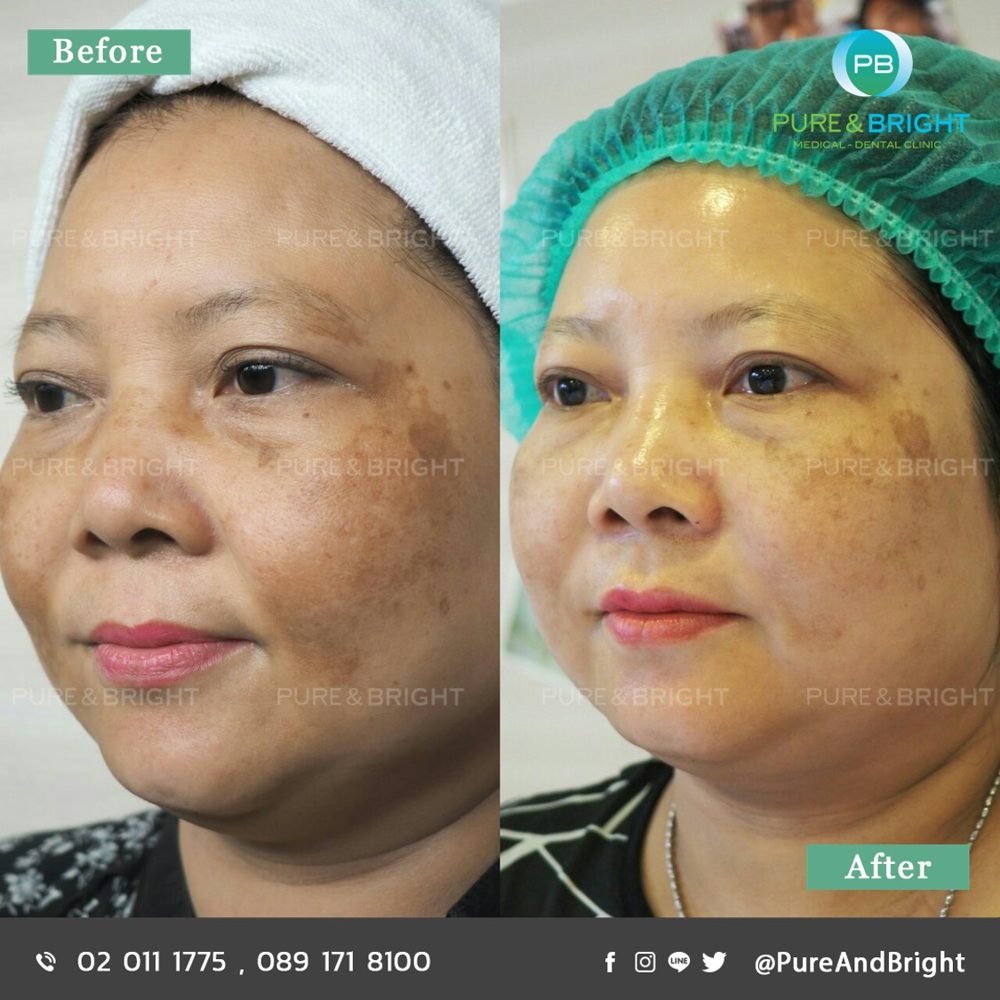
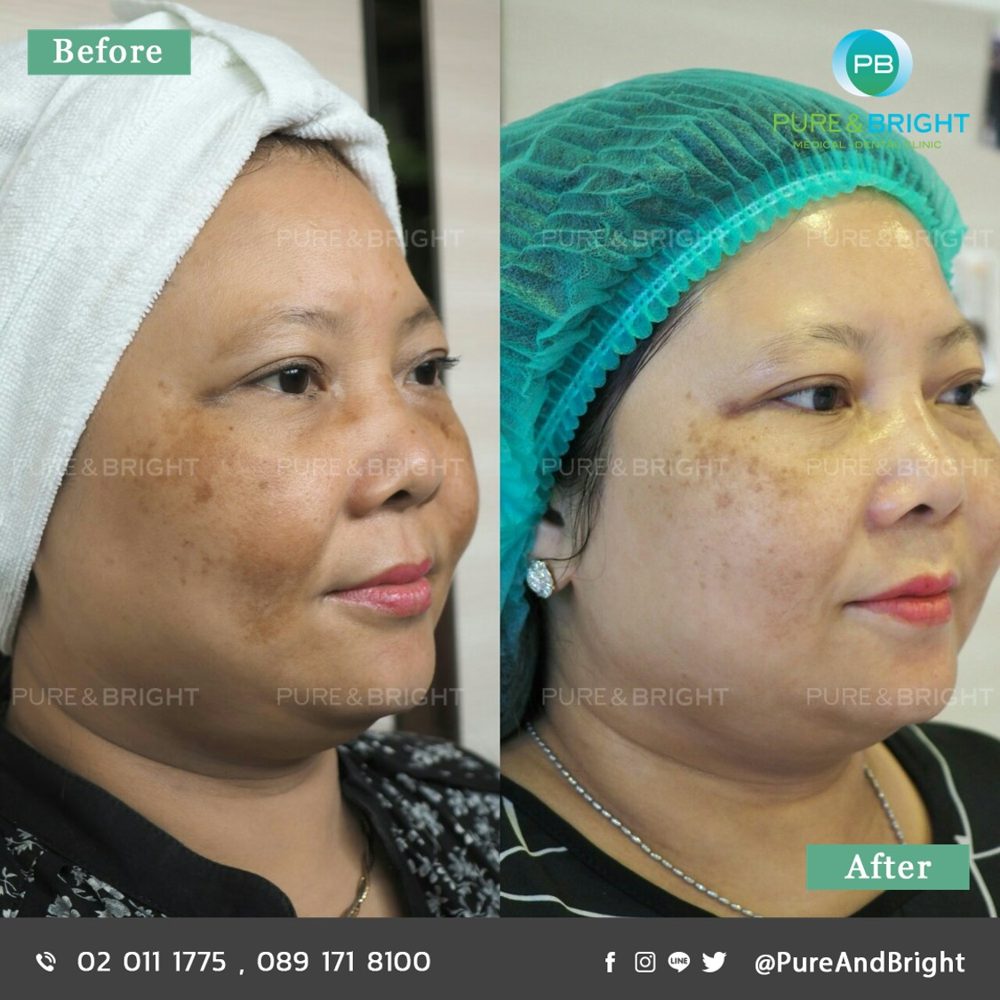
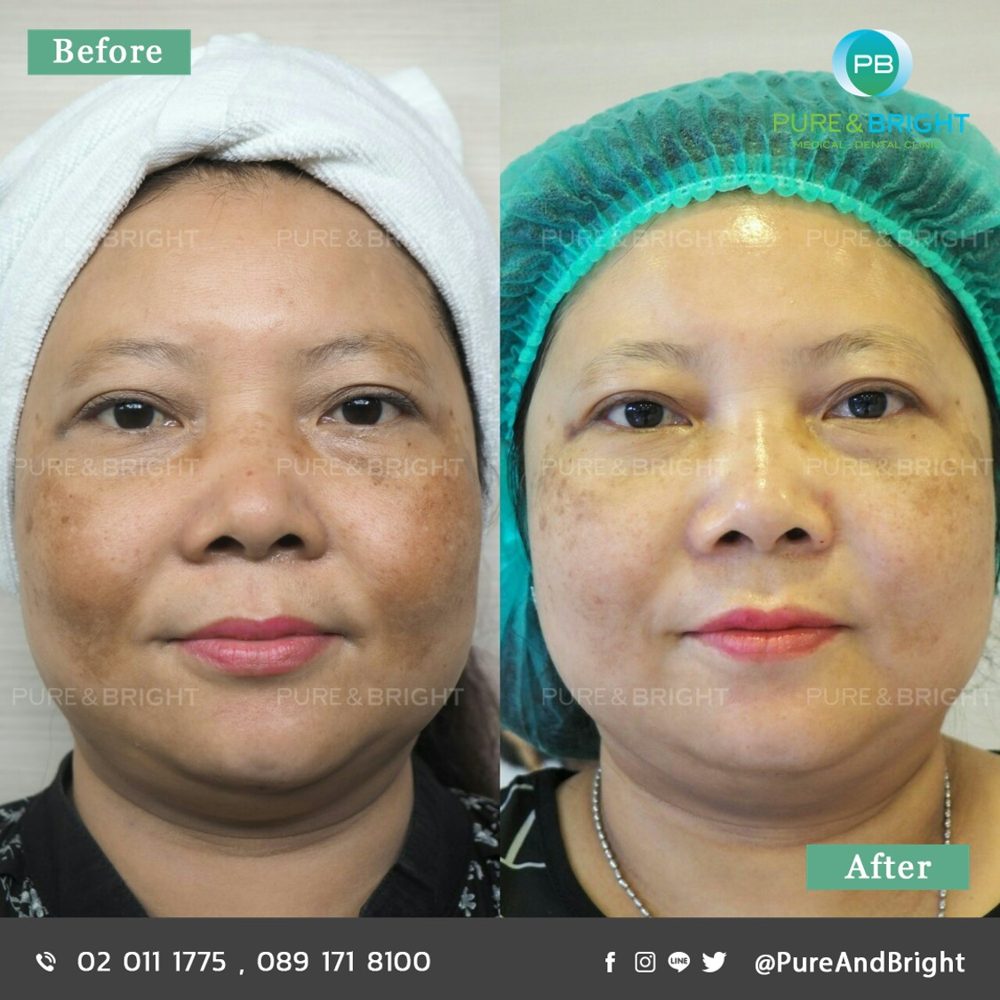
Results from our patients
Prices
| Melasma examination and programme planning Wood's lamp examination, photographs, individual plan | Free |
| Topicals and sunscreen as prescribed Charged per item, typically per month | [ ] |
| Full-face laser toning, 1 session Low-energy laser, cold compress, sunscreen | [ ] |
| 3-month melasma programme 5–6 laser sessions, topicals and a doctor's review at every visit | [ ] |
Frequently Asked Questions
Can melasma be cured?
Not permanently, but in most people it can be faded by 40–70 per cent within 3 months and kept under control with sunscreen and a mild topical. Dermal melasma responds more slowly and less can be expected.
Can laser make melasma darker?
Yes, if the energy is too high or the sessions too frequent, or if the skin is not protected from the sun afterwards. That is why we use low energy, space the sessions, prepare the skin with topicals for 2–4 weeks first, and stop if the skin is not responding well.
Can I treat melasma while pregnant?
During pregnancy the focus is on sunscreen and azelaic acid. Hydroquinone, retinoids, oral tranexamic acid and laser are avoided. Pregnancy melasma partly fades on its own after delivery, and the full programme can begin then.
My melasma cream is making my skin thin and red. What should I do?
Stop using it and bring it to show the doctor. Creams without a registration number often contain potent steroids or mercury, which thin the skin, dilate capillaries and cause the melasma to return darker than before once you stop.
 WhatsApp
Related services
Skin & Laser
Melasma, freckles, dark spots, acne, acne scars, pores, hair removal and mole removal with multiple laser systems
Injectables & Skin Rejuvenation
Anti-wrinkle injections, HA filler, skin boosters, collagen stimulators, PRP and fat-dissolving injections
Non-Surgical Lifting
HIFU, radiofrequency, thread lifting, plasma double-eyelid treatment, Enerjet and LDM