No-shave FUE hair transplant (Nanotrim FUE™): wounds under 1 mm, fast recovery
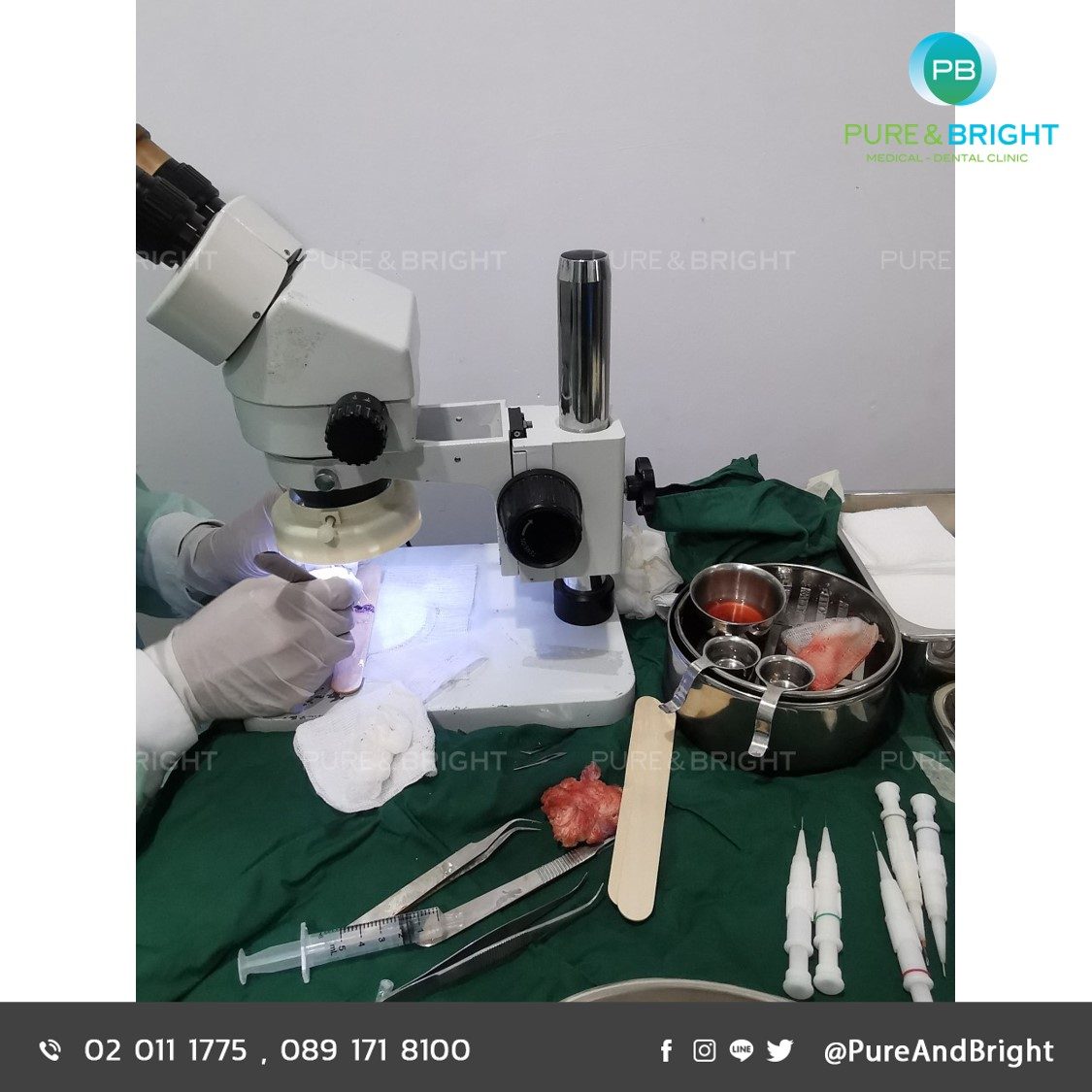
Follicles are moved from the back of the head one graft at a time using a punch smaller than 1 mm, and every graft is sorted under a microscope before placement. No need to shave the whole head, no long surgical scar, and most people are back at work within a few days.
What FUE is, and why we use the no-shave method
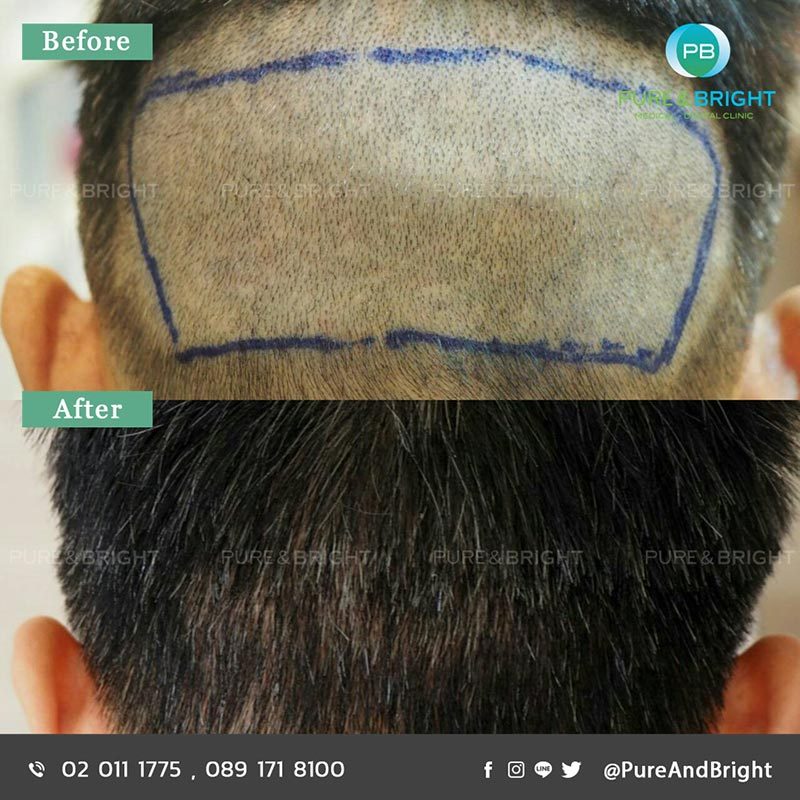
FUE (Follicular Unit Extraction) harvests follicles one unit (graft) at a time from the back of the head, where hair is resistant to hormones, and transplants them into thinning areas. Our Nanotrim FUE™ technique divides the donor area into staggered zones and trims only small sections that the hair above can cover, so there is no need to shave the whole head. Every graft is sorted and trimmed under a microscope to remove damaged units and select 1-, 2- or 3-hair grafts for each position. In experienced hands most transplanted grafts take (typically around 85–95%), but no technique achieves growth of every graft; results depend on graft quality, scalp condition and each person's aftercare.
Who it suits
High hairline, wide forehead or M-shaped recession
A transplant to design a new hairline that fits the face shape; most cases use 1,500–2,500 grafts
Circular bald patch at the crown
Adds density to an area where follicles have already been lost, with graft numbers based on the size of the area
Eyebrows, sideburns, moustache and beard
Fewer grafts, but precise hair direction is essential. Transplanted hair keeps growing and needs regular trimming
Scalp scars
From accidents, surgery or the linear scar of a previous strip (FUT) hair transplant
The procedure day (about 6–8 hours)
Results over time
Preparation and aftercare
- Stop aspirin, anti-inflammatory drugs, vitamin E, fish oil and certain herbal supplements 7 days before the procedure (check with the prescribing doctor before stopping any medication)
- Avoid alcohol for 3 days and smoking for at least 1 week before and after, as these reduce blood supply to the grafts
- Wash your hair thoroughly on the morning of the procedure, without gel or spray, and wear a button-up shirt so you can undress without rubbing your head
- Sleep with your head elevated for 3 nights afterwards; avoid bending low, heavy lifting and strenuous exercise for 2 weeks
- Wash daily as instructed, never scratch or pick scabs, and avoid strong sun, swimming pools and saunas for 1 month
Hair loss that has not stabilised (under about 25 years old and still losing hair quickly), diffuse thinning that also affects the donor area, active alopecia areata, scalp inflammation, uncontrolled diabetes, bleeding disorders, a tendency to keloid scarring, and anyone expecting the density of their teenage years. Dr. Kate will explain the limitations frankly before accepting a case
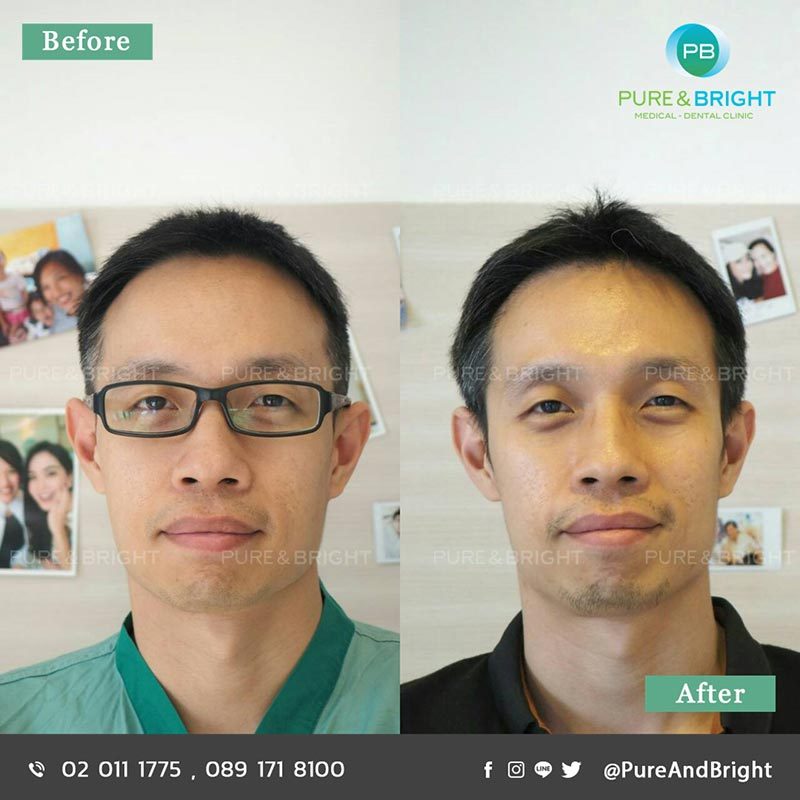
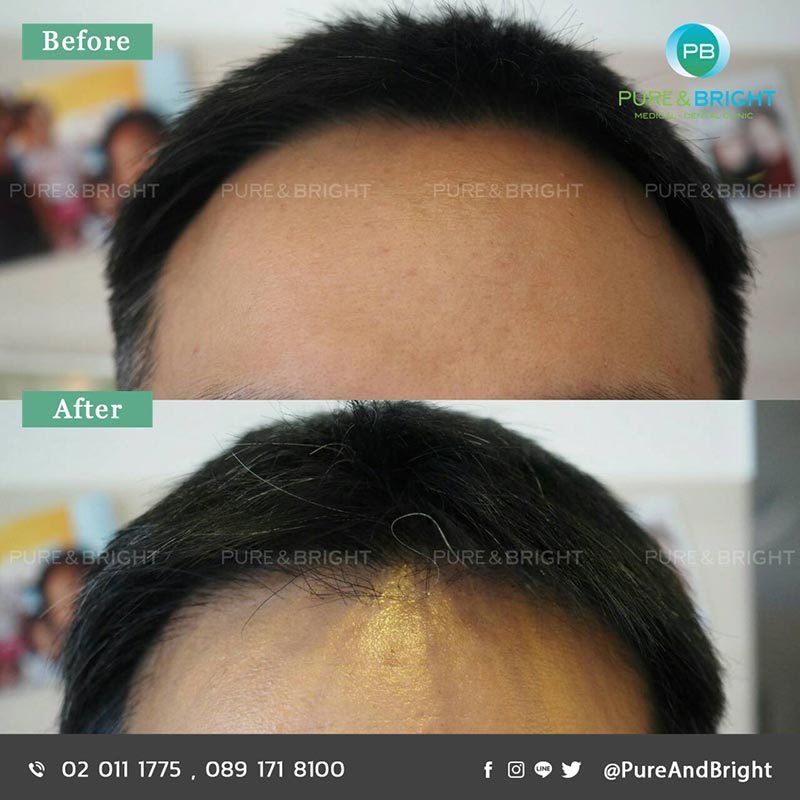
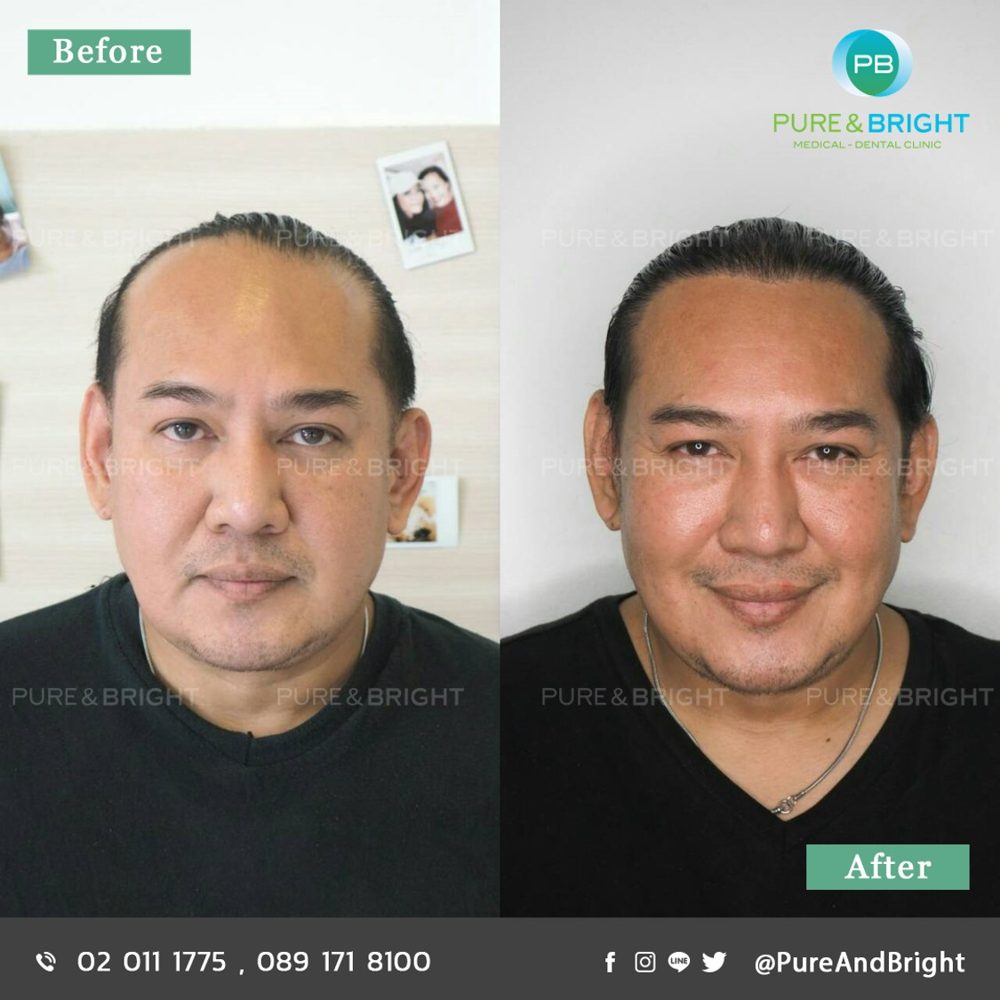
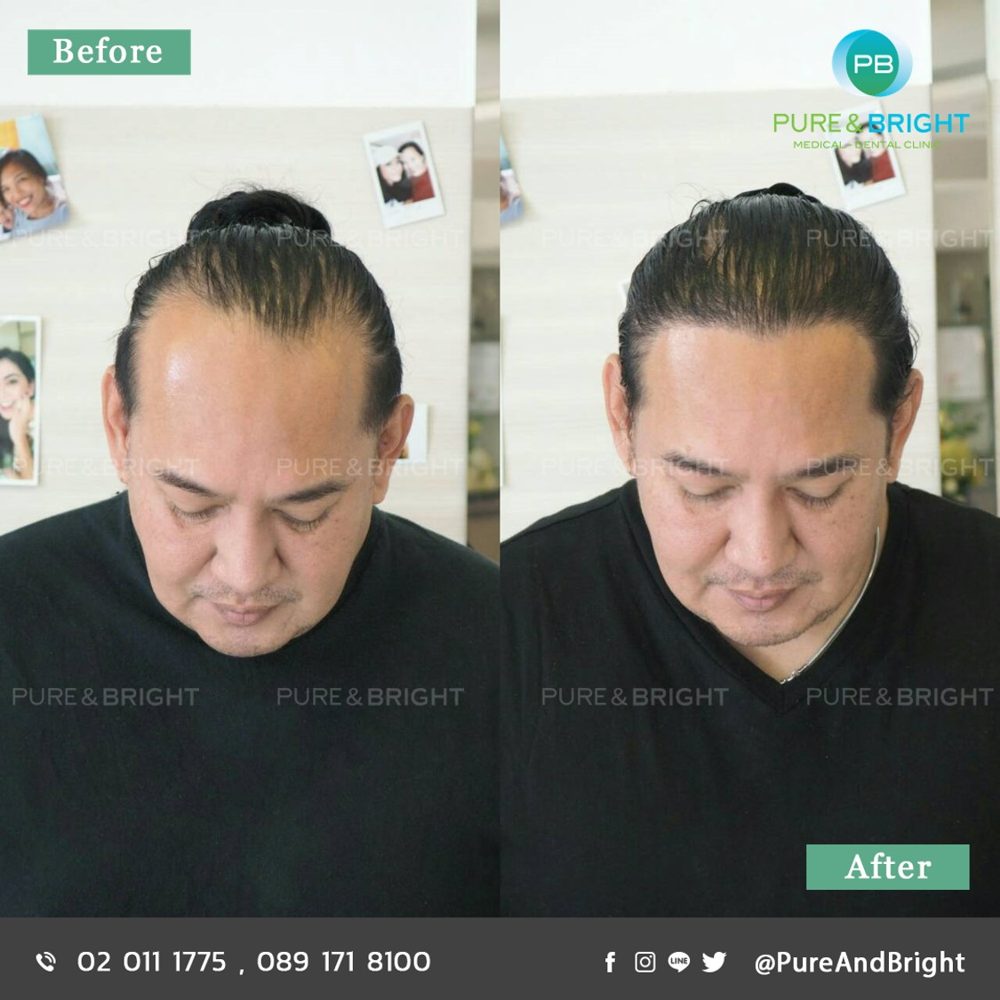
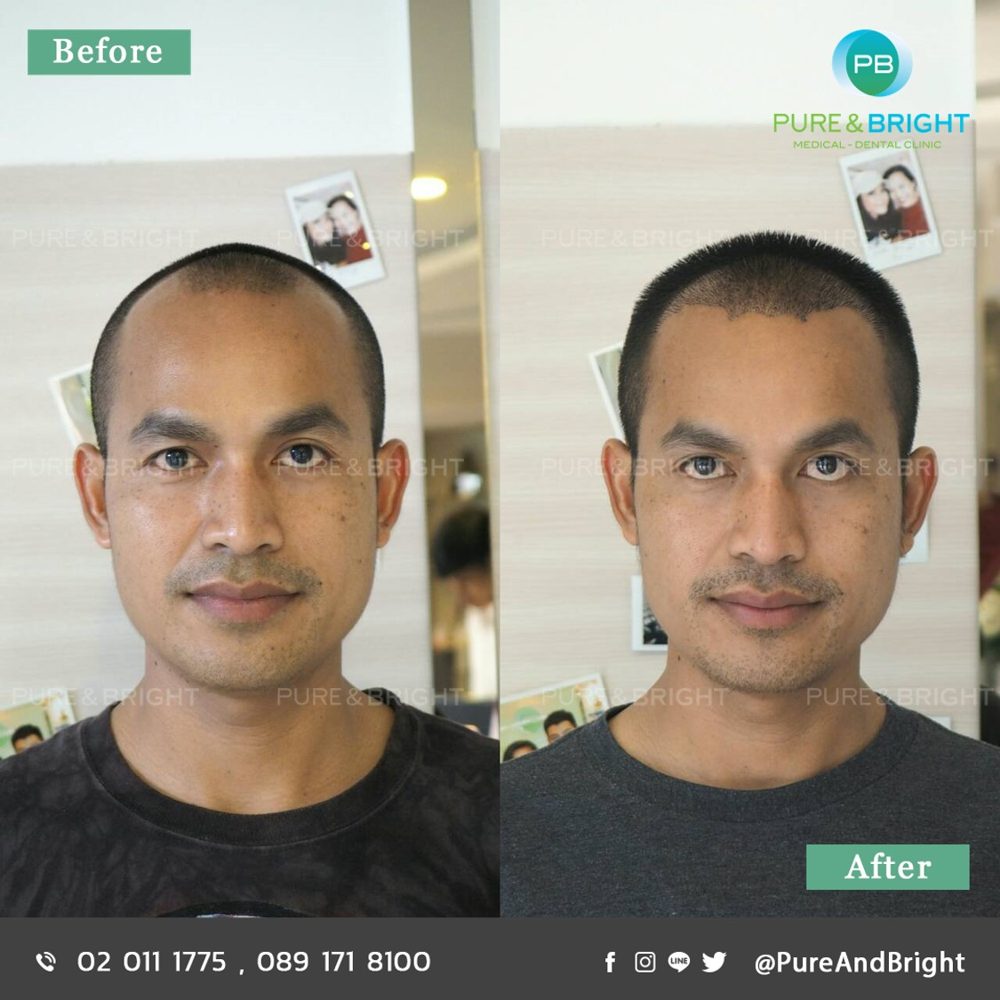
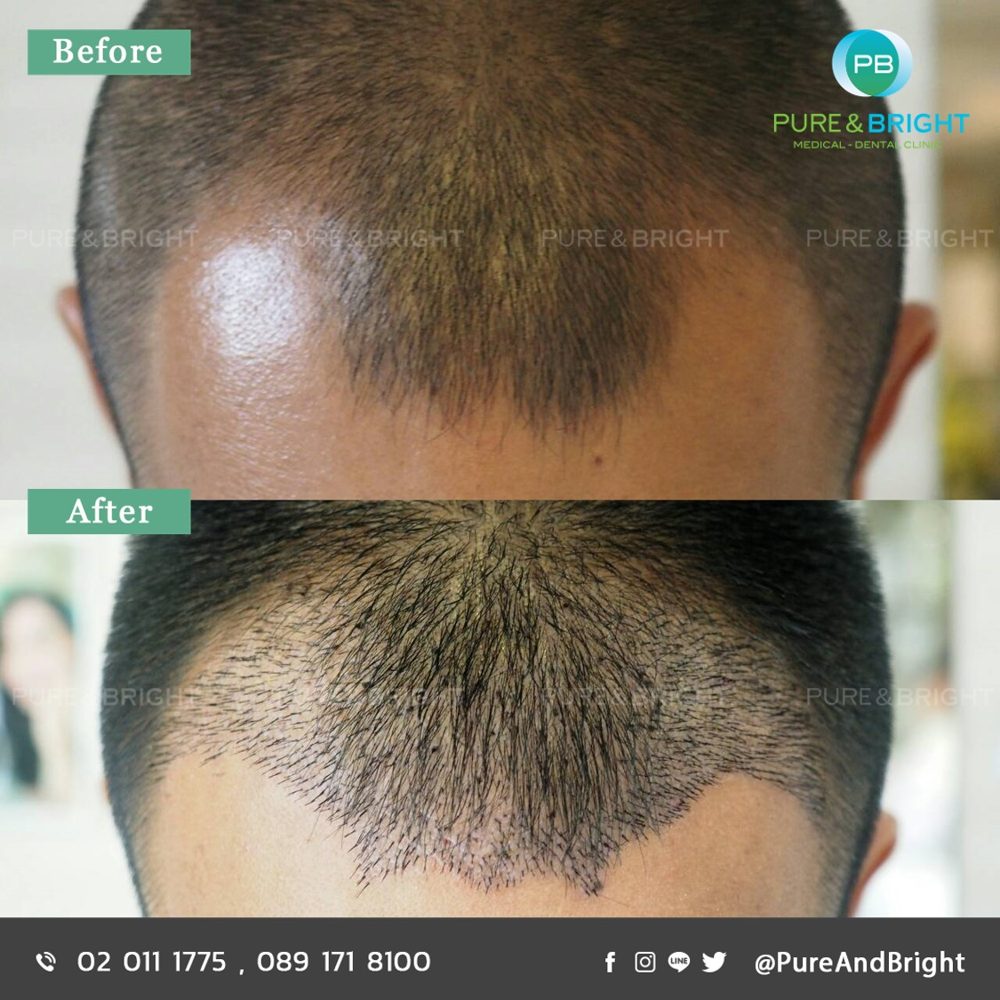
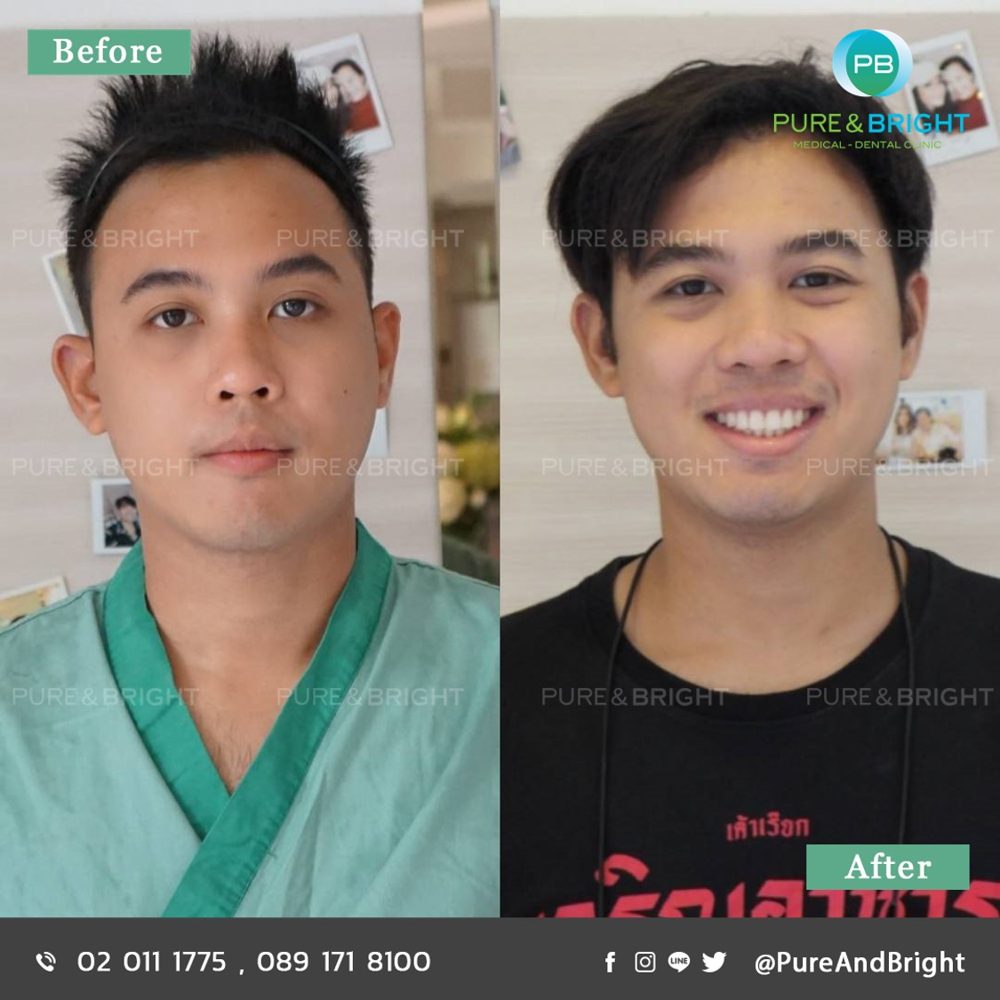
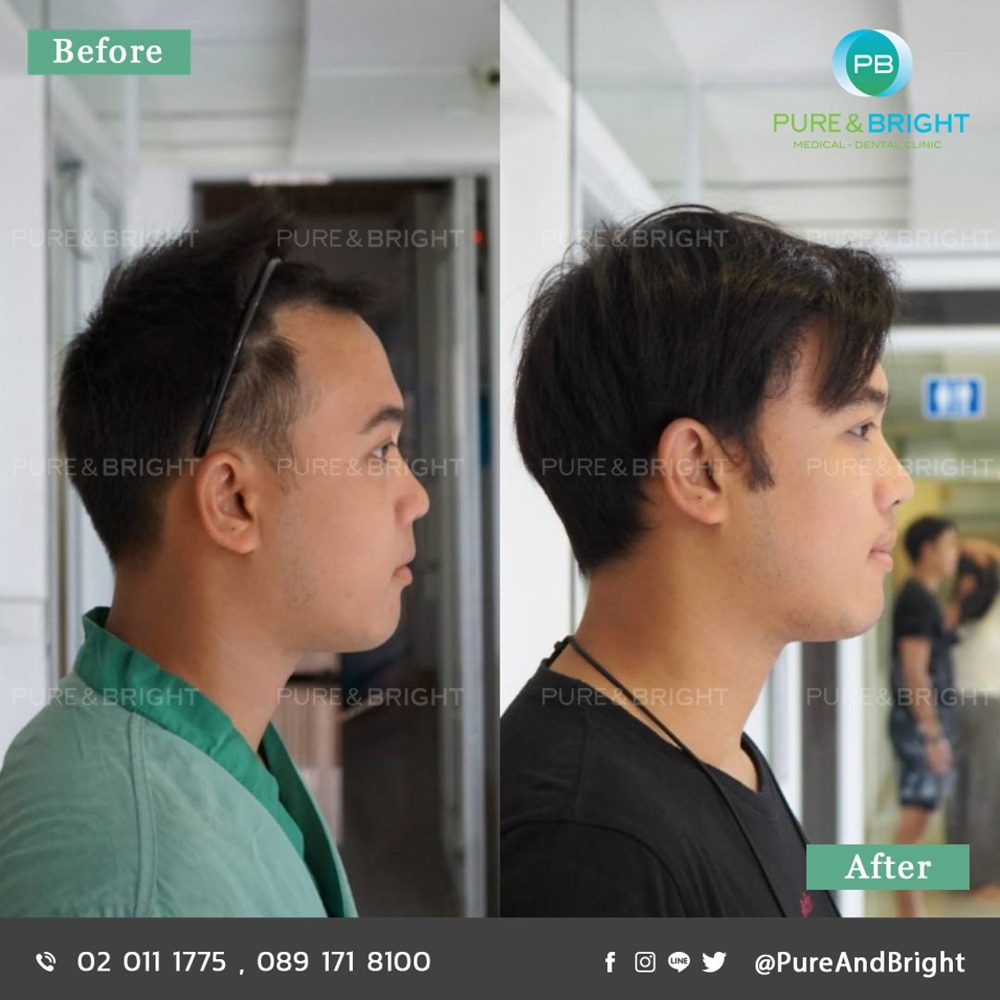
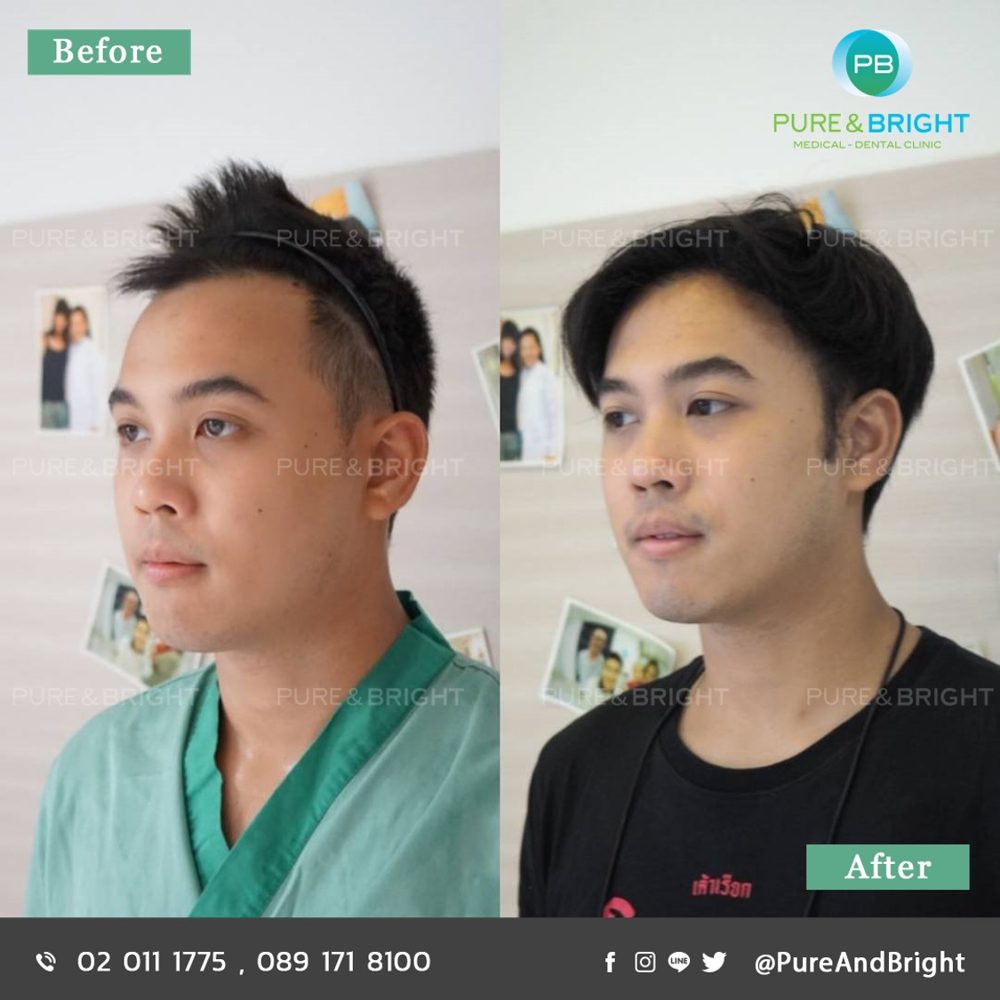
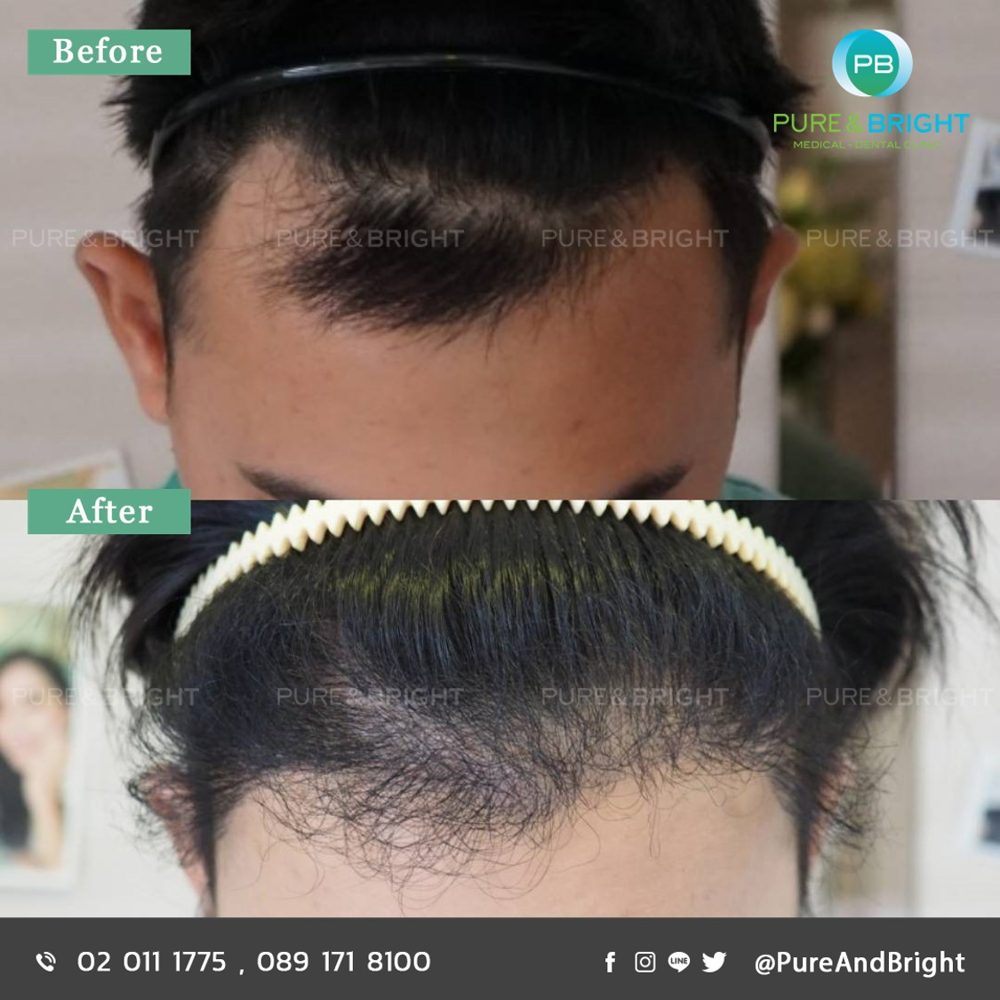
Results from our patients
Prices
| Nanotrim FUE™ up to 1,000 grafts Suited to eyebrows, sideburns, moustache or partial hairline fill, including pre-procedure blood tests, take-home medication and next-day hair wash | From 59,000 THB |
| Nanotrim FUE™ up to 2,000 grafts Suited to the female hairline, a wide forehead or moderate crown thinning | From 69,000 THB |
| Nanotrim FUE™ up to 3,000 grafts Suited to larger areas covering both the front and the crown | From 79,000 THB |
| Nanotrim FUE™ combined with PureCells™ Grafts transplanted into the bald area plus follicle-cell injection to care for the thinning hair around it, on the same day | From 69,000 THB |
Related
DHI and Long Hair transplant
Grafts placed with an implanter for fine angle control, suited to the hairline and to anyone who wants to see the hairline from day one
Read more →PureCells™ follicle-cell injection
Cares for thinning existing hair without shaving; can be combined with FUE
Read more →Hair-loss treatment programme
Medication and treatments to protect existing hair after a transplant
Read more →Frequently Asked Questions
Does FUE hurt?
The local anaesthetic injections sting slightly for a few minutes. After that, most people feel no pain during the procedure and can watch a film or sleep. Once the anaesthetic wears off there may be some tightness at the back of the head, which ordinary painkillers control.
Is it really no-shave? Will people around me notice?
Only small strips are trimmed within the donor zone, where the hair above covers them. In the recipient area small scabs are visible for about 7–10 days. If your existing hair is long enough, or you wear a hat from day 3, most people notice nothing.
Will the transplanted hair fall out again?
Grafts from the back of the head are hormone-resistant, so they usually last a long time. The existing hair around them that was not transplanted can still thin with hereditary loss, which is why the doctor usually recommends medication or treatments alongside.
How many grafts will I need?
It depends on the size of the area and the density you want. Typically the hairline needs 1,500–2,500 grafts, the crown 1,500–3,000 and eyebrows 200–400. The doctor assesses this at your consultation.
Can I have a second transplant?
Yes, if the donor area still has enough grafts, but you should wait about 12 months for the first result to mature so the areas that genuinely need more can be identified.
 WhatsApp
Related services
Hair Transplant & Hair Loss
Nanotrim FUE, DHI Long Hair, PureCells and doctor-led hair-loss treatment programmes
Skin & Laser
Melasma, freckles, dark spots, acne, acne scars, pores, hair removal and mole removal with multiple laser systems
Injectables & Skin Rejuvenation
Anti-wrinkle injections, HA filler, skin boosters, collagen stimulators, PRP and fat-dissolving injections