Acne scar programme: fractional laser, subcision, TCA cross and PRP, chosen by scar type
There are three types of acne scar and no single method works for all of them. The doctor identifies the scar types on your face and plans a combination, typically 4–6 rounds spaced 4–6 weeks apart, and tells you from the outset how much improvement you can expect.
Scar types and the methods they respond to
| Type | Appearance | Main method | Supporting methods |
|---|---|---|---|
| Ice pick | Narrower than 2 mm, deep like a pinhole | TCA cross | Fractional laser once the edges have softened |
| Boxcar | Sharp edges, flat base, 2–4 mm wide | Fractional laser | TCA cross on the edges, or filler for deep scars |
| Rolling | Wide, soft edges, skin ripples when stretched | Subcision | Fractional laser, PRP, filler or collagen stimulators |
| Mixed scars across the face | The most common pattern | Fractional laser as the core | Each method added where needed |
What each method does
Fractional laser (Refine)
Builds new collagen across the whole area, making scars shallower and the skin smoother. Every 4 weeks, 4–6 sessions
Subcision
A blunt-tipped needle is passed beneath rolling scars to cut the fibrous bands pulling the skin down. Local anaesthetic, 5–10 days of bruising, 1–3 sessions
TCA cross
High-concentration trichloroacetic acid is dotted into the base of ice-pick scars, prompting them to fill from within. 3–6 sessions, 4–6 weeks apart
Microneedling and RF microneedling
Fine needles 1.5–2.5 mm deep, some releasing RF at the tip, stimulate collagen with a low risk of dark marks
PRP from your own blood
Applied or injected after laser or microneedling to speed recovery and modestly improve results
HA filler or collagen stimulators
Fills beneath rolling scars that remain depressed after subcision. Quick results, lasting 9–18 months
A typical programme
Recovery for each method
Acne scars do not disappear completely. They generally become 40–70 per cent shallower after a full programme. Darker skin carries a risk of temporary dark marks from TCA cross and laser, so the doctor lowers the concentration and prescribes preventive topicals. Not suitable if you have a history of keloids, are pregnant, have an active cold sore, or take blood thinners without telling the doctor
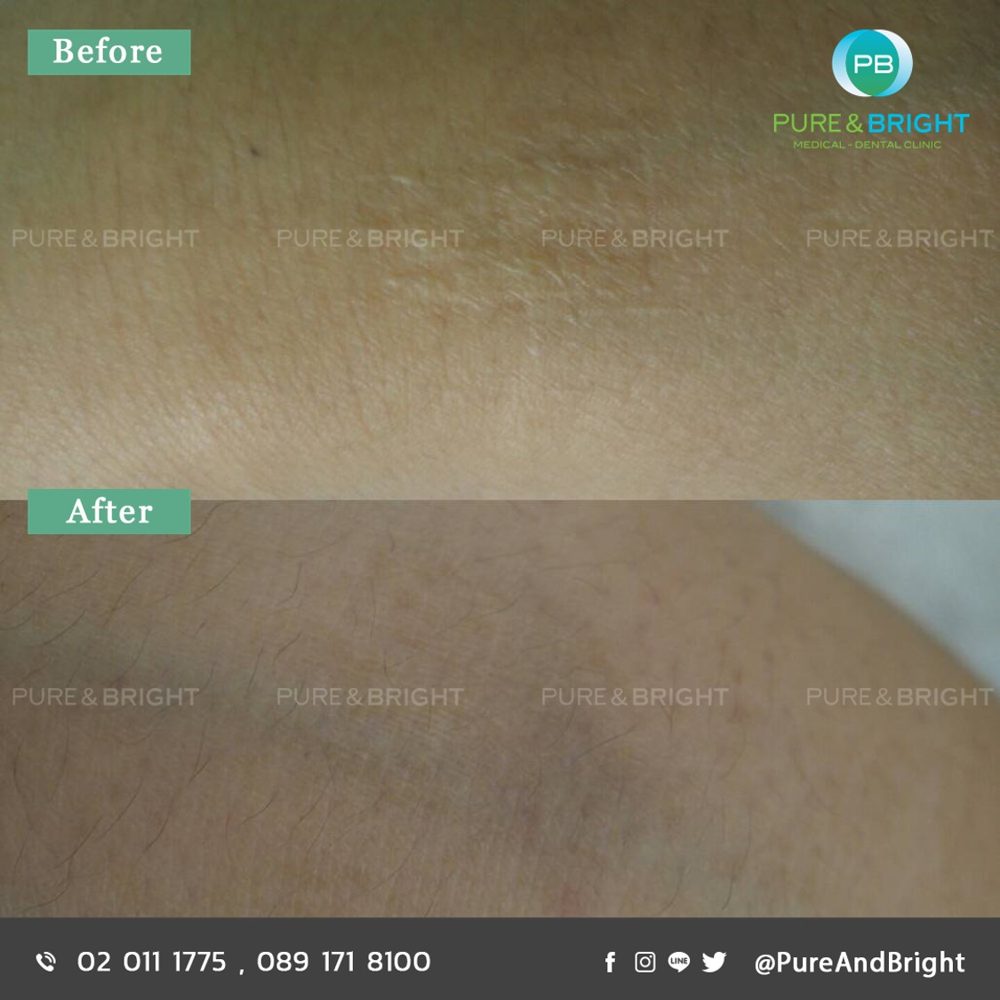
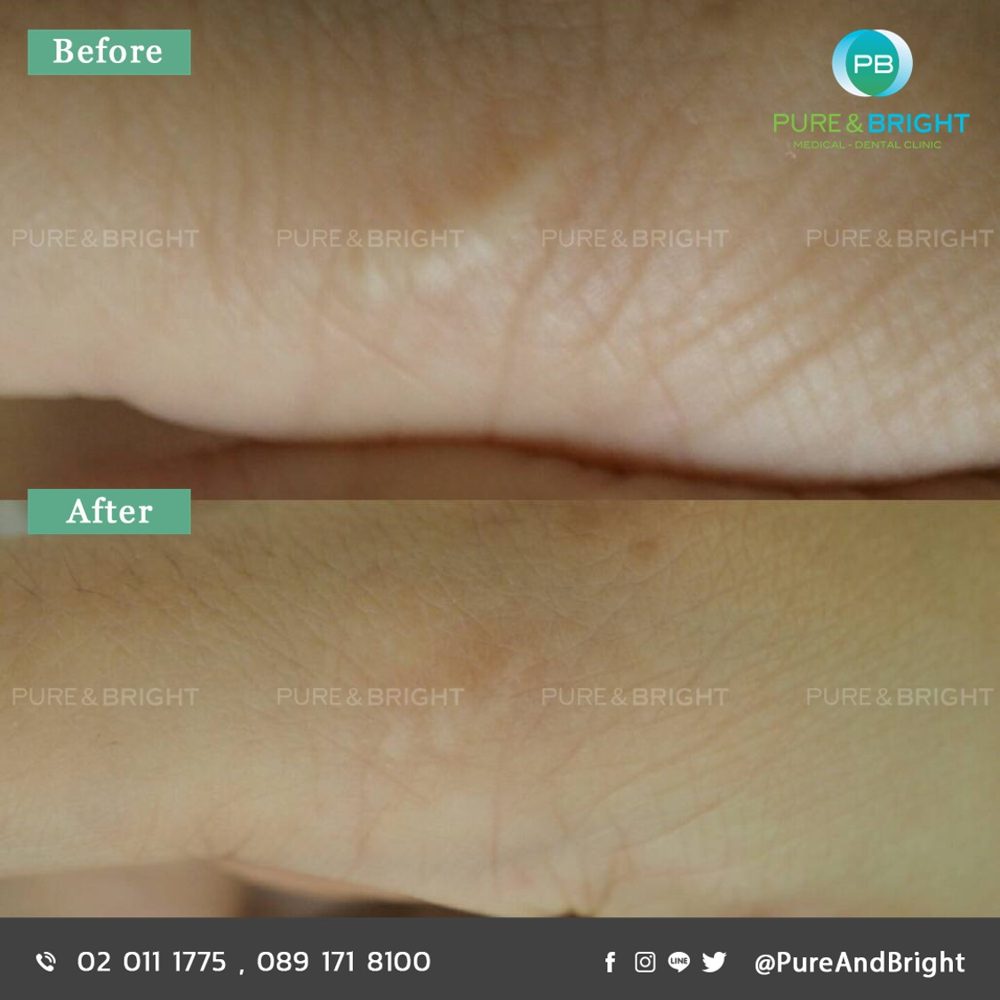
Results from our patients
Prices
| Scar-type assessment and planning By a dermatologist, with photographs | Free |
| Fractional laser full face, 1 session Numbing cream, laser, repair cream | From 1,000 THB |
| Subcision, per area Local anaesthetic, performed by a doctor | [ ] |
| TCA cross, per session Unlimited number of points | [ ] |
| PRP add-on, 1 session Blood draw, centrifuge, applied or injected after the procedure | [ ] |
Frequently Asked Questions
Can acne scars be made completely smooth again?
Not entirely. Skin that has lost collagen can rebuild some of it, and scars generally become 40–70 per cent shallower, which looks noticeably smoother in normal light. The doctor assesses your scars and tells you the range you can expect.
How many rounds, and how long does it take?
Typically 4–6 rounds spaced 4–6 weeks apart, so 5–8 months in total, with the full result visible 3–6 months after the last round.
I still get acne. Can I treat the scars at the same time?
We do not recommend it. New acne creates new scars, and procedures on inflamed skin carry a risk of infection. The acne should be settled for 2–3 months first.
Can it be done on darker skin?
Yes, but the doctor chooses methods with a lower risk of dark marks, such as RF microneedling and subcision, reduces the TCA concentration, and prescribes preventive topicals before and after treatment.
 WhatsApp
Related services
Skin & Laser
Melasma, freckles, dark spots, acne, acne scars, pores, hair removal and mole removal with multiple laser systems
Injectables & Skin Rejuvenation
Anti-wrinkle injections, HA filler, skin boosters, collagen stimulators, PRP and fat-dissolving injections
Non-Surgical Lifting
HIFU, radiofrequency, thread lifting, plasma double-eyelid treatment, Enerjet and LDM