Hair transplants and hair-loss treatment by a doctor with more than 1,000 cases
From scalp examination to find the cause of hair loss, through medication and follicle-stimulating treatments, to hair transplants using FUE, DHI and PureCells™. Dr. Kate assesses every case personally and tells you honestly which approach suits you, or whether you should not have a transplant yet.
Our hair services
No-shave FUE hair transplant (Nanotrim FUE™)
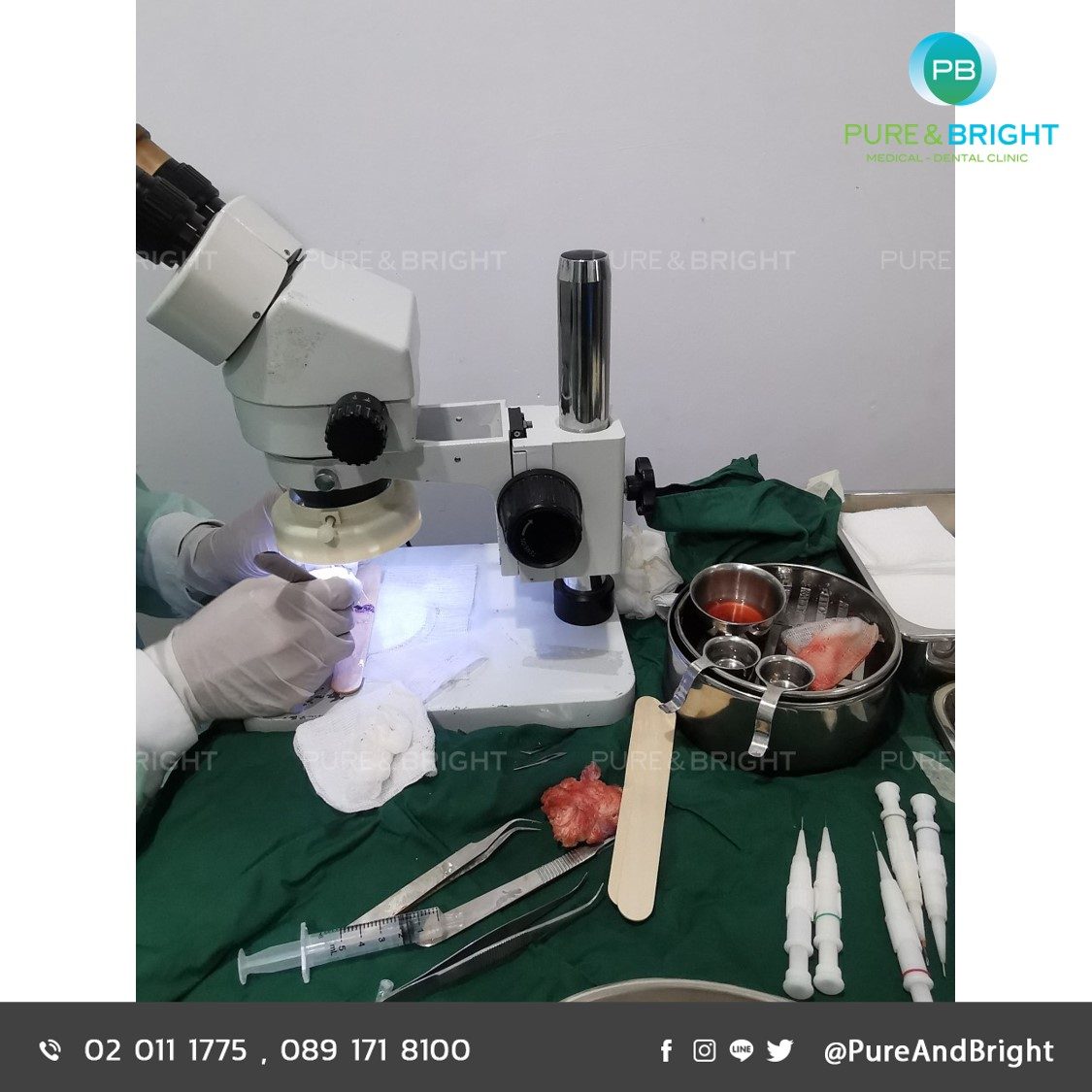
Follicles are moved one graft at a time with a punch smaller than 1 mm and sorted under a microscope. Suited to the hairline, forehead, crown, eyebrows, sideburns, moustache and scar coverage
Read more →DHI and Long Hair transplant
Grafts are placed with a 0.6–0.8 mm implanter for fine control of angle and depth; with the long-hair technique you can see the designed hairline on the day of the procedure
Read more →Nanograft PureCells™ follicle-cell injection
Three small scalp tissue samples are processed into micrografts and injected back into thinning areas. No shaving, no downtime
Read more →Hair-loss and scalp treatment programme
Scalp examination under magnification, blood tests to find the cause, and care with medication, PRP-LED, low-level laser and hair mesotherapy before deciding on a transplant
Read more →Browse by concern
High hairline, wide forehead or M-shaped recession
Usually hereditary hair loss. Once the follicles in that area are gone, medication cannot help; FUE or DHI transplantation is needed to design a new hairline
Thinning crown with a visible circle of scalp
If hair is still present but finer, you can start with medication and PureCells™. If the area is clearly bald, a FUE transplant combined with medication to protect existing hair is recommended
Diffuse thinning across the scalp or a widening parting (common in women)
Blood tests to find the cause come first, such as iron, thyroid and hormones, followed by treatment with medication, hair mesotherapy, PRP-LED or PureCells™
Sudden hair loss, patchy loss or an inflamed scalp
See a dermatologist first. This may be hair loss after illness or childbirth, an autoimmune condition or a fungal infection, which must be treated at the cause rather than with a transplant
Sparse eyebrows, sideburns, moustache or beard
Transplanted with FUE using a small number of grafts (usually under 1,000), with particular attention to a natural hair direction
Scalp scars, or an unsatisfactory transplant elsewhere
The scar thickness and remaining graft supply are assessed first. A repeat transplant should wait until the previous result has matured, about 1 year
What happens at your consultation
Hair loss has many causes, and the supply of donor grafts at the back of the head is finite. An assessment by a doctor first means you do not spend money on an approach that does not address your problem, and your grafts are not used wastefully
Frequently Asked Questions
Which kinds of hair loss suit a transplant, and which do not yet?
A transplant suits areas where follicles have already been lost through hereditary hair loss or scarring. Hair loss caused by stress, childbirth, iron deficiency, thyroid disorders or scalp inflammation should be treated at the cause first, because the hair usually regrows on its own.
Do I need to keep taking medication after a transplant?
Hair transplanted from the back of the head is usually resistant to hereditary loss, but the existing hair around it can continue to thin. Most doctors therefore recommend medication or treatments to protect the existing hair alongside the transplant, depending on the individual assessment.
Can women have hair transplants?
Yes, particularly for a high hairline or wide forehead. Diffuse thinning in women, however, usually responds better to medication, hair mesotherapy or PureCells™. The doctor examines the scalp and blood results before recommending an approach.
 WhatsApp